
- calendar_today August 31, 2025
WhatsApp is getting ads — for the first time since it launched in 2009, it will feature advertising. They won’t appear in your messages or group chats. Instead, they’ll live in the “Updates” tab — where users post Status updates or follow Channels for specific topics and interests. Meta, the company that owns WhatsApp, said that this is a deliberate decision so ads won’t “interfere” with “personal chats.” Ads will roll out slowly, and will be shown to more users over time.
Over 1.5 billion people visit the Updates tab every day, said Meta, which gives companies plenty of potential eyeballs. However, if you’re a WhatsApp purist and only use the app for chatting, you might never see an ad. If you’re someone who does regularly visit the Updates tab, it might look a bit different for you.
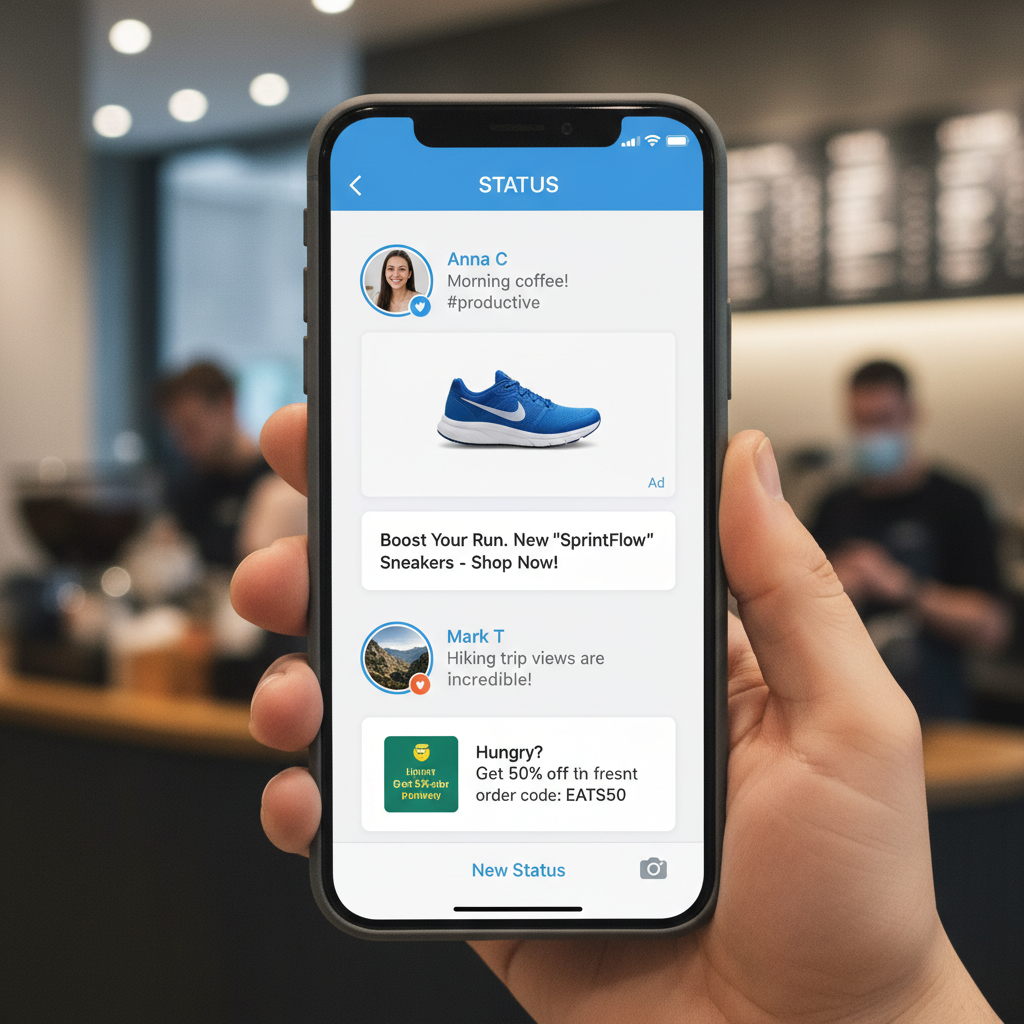
There are three types of ads coming to WhatsApp. First, there will be ads in the Status section. While you’re scrolling through friends’ photos, videos, and text updates that disappear after 24 hours, you might also see a company’s update in between. The updates look and feel like regular statuses — except they’re from brands. You can even start a conversation with a business directly by clicking on them.
Second, WhatsApp will introduce Promoted Channels, which allow administrators to pay to make their content appear more frequently to users. For businesses and creators, this is a way to grow their audience directly within WhatsApp — something that hasn’t really been possible before.
Third, Meta is experimenting with a subscription model for Channels. Businesses can charge users a monthly fee in exchange for exclusive content. A user might pay to subscribe to a cooking channel that sends out recipes and updates that only members get access to. It’s a new revenue stream for WhatsApp, and a monetization method for brands and influencers.
And what about privacy? That’s what users will be wondering. After all, WhatsApp has built its reputation on being a private, secure messaging service. Meta said it’s taking a cautious approach. Ad targeting will be based on broad information — like your country code, device language, age range, and city — instead of exact location or personal data. WhatsApp will also use engagement behavior on Channels and Status updates to determine what ads you see. For example, what topics you follow, how you interact with posts, and which ads you click on.
Most importantly, all your messages will remain end-to-end encrypted. WhatsApp said it won’t read your messages or use them to target ads. And for those who also use other Meta products like Instagram or Facebook, there’s an optional feature called Accounts Center. When you connect WhatsApp to this, Meta can use cross-platform data to personalize your ad experience. It’s off by default, and you can disconnect it at any time.
WhatsApp will also provide transparency tools for users to understand and control their ad experience. You’ll be able to see why a specific ad was shown to you, block specific advertisers, or report an ad that you feel is inappropriate. The company is trying to make the experience as user-friendly — and as optional — as possible.
The company is doing this because Meta’s financial position is precarious. WhatsApp, which has more than 2 billion users worldwide, hasn’t contributed much to Meta’s advertising empire. Most of WhatsApp’s current revenue comes from its Business Platform — a paid product that allows businesses to talk to customers — and “click-to-WhatsApp” ads on Facebook and Instagram. But that’s changing. Meta CEO Mark Zuckerberg has said that WhatsApp’s Business Platform is a growing revenue stream. Now, by adding ads directly inside WhatsApp, Meta is looking to go even further.
This move is a part of a larger strategy for Meta. WhatsApp, despite having over 2 billion users globally, hasn’t been a huge revenue source for Meta’s massive advertising empire. Most of WhatsApp’s current revenue comes from its Business Platform — a paid product that allows businesses to talk to customers — and “click-to-WhatsApp” ads on Facebook and Instagram. But that’s changing. Meta CEO Mark Zuckerberg has said that WhatsApp’s Business Platform is a growing revenue stream. Now, by adding ads directly inside WhatsApp, Meta is looking to go even further.
“This felt like the next natural evolution,” said Alice Newton Rex, WhatsApp’s VP of Product. Businesses have been asking for more ways to reach users directly within the app — and this new ad system is Meta’s answer. Other social platforms like Reddit and Discord are diving deeper into advertising models too. social apps — even ones that promise to be built on privacy-first promises — are finding ways to show ads without alienating their audiences.
Meta bought WhatsApp for $16 billion in 2014. For years, the app remained untouched by Meta’s ad machine. But with the advertising business being more critical than ever — Meta earns about 98 percent of its revenue from ads — WhatsApp was always going to be next. This is the beginning of a new era for the platform.
For users, the change might go unnoticed — especially if they don’t use the Updates tab. But for WhatsApp and Meta, this is a big shift. One that reflects both the pressure of economic conditions and the demand for growth from investors.
Ads on WhatsApp are no longer hypothetical — they’re here. The experience is mostly untouched for now. But with Meta at the wheel, this could just be the start of WhatsApp’s transformation into a full-scale commercial platform.