
- calendar_today August 20, 2025
.
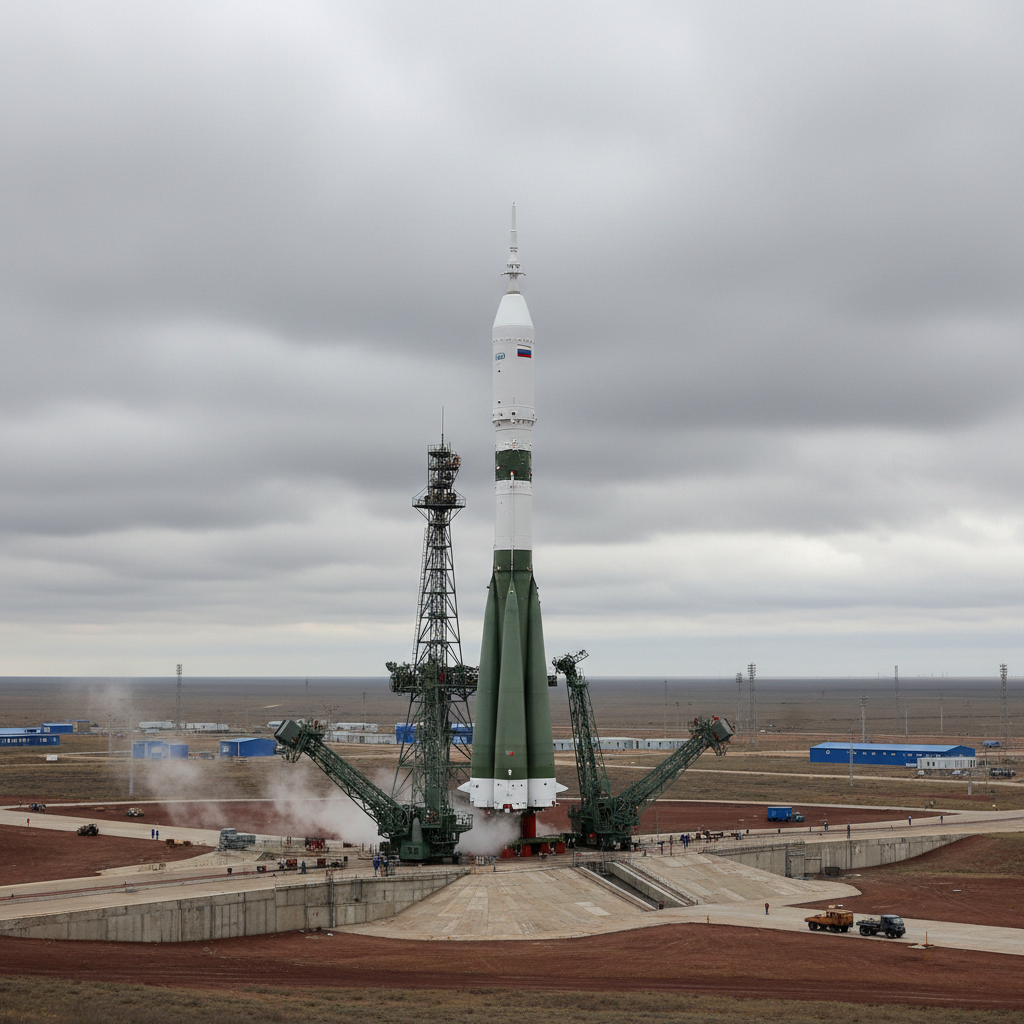
Russia plans to send its latest rocket, Soyuz-5, on its first test flight before the end of this year. Dmitry Bakanov, the director of state space corporation Roscosmos, confirmed the information in an interview with state news agency TASS.
“Yes, we are planning for December,” Bakanov said. “Everything is in place.”
The launch, if confirmed, will take place from the Baikonur cosmodrome in Kazakhstan. It would be the first flight of the rocket since development began more than ten years ago. Roscosmos says it will conduct several demonstrations, but the rocket is not expected to enter full service before 2028.
Soviet Roots in a Modern Era
Soyuz-5, sometimes known as Irtysh, is not a revolutionary design. It is, in fact, very Soviet. Engineers at Roscosmos started the work in 2016, but it reuses much older technology with a notable change: This time, all production is done in Russia.
The difference is not a technicality. For many years, Russia imported rocket components from Ukraine, especially for the Zenit-2 launch vehicle. Zenit was first developed in the 1980s by Yuzhnoye Design Bureau in Dnipro, Ukraine. It had its first launch in 1999 and flew into the 2010s, supporting dozens of missions. The first stage and second stage of Zenit were made in Ukraine, but the primary engine was Russian: the RD-171, developed by NPO Energomash.
Moscow and Kyiv cooperated for decades after the Soviet collapse, but relations turned toxic after Russia invaded Ukraine in 2022. In late 2023, Russia even bombed the factory in Ukraine where Zenit launch vehicles were built.
The Soyuz-5 is, in many ways, a larger and domestically produced version of Zenit. By producing all parts of the rocket in Russia, Moscow ends years of dependence on Ukraine.
What the Rocket Can Do
Soyuz-5 is a medium-lift launch vehicle with the ability to lift around 17 metric tons of payload into low-Earth orbit. It has bigger fuel tanks than the Zenit-2, giving it more lifting capacity.
The most important part of the rocket, however, is the RD-171MV engine, the latest iteration of an engine that has been around for decades. This one dates back to the Soviet Union’s Energia launch system, which flew the Buran space shuttle. The RD-171MV is a descendant of the RD-171 that powered Zenit.
The big difference between the old Zenit engine and the RD-171MV is that the latter does not use any Ukrainian parts. It is fueled with kerosene and liquid oxygen. The engine also packs a lot of thrust: more than three times as much as the Space Shuttle main engine. Today, the RD-171MV is believed to be the world’s most powerful liquid-fueled engine.
One big difference is that Soyuz-5 is expendable, with competitors like SpaceX’s Falcon 9 having reusable parts. That will likely impact how competitive the new launch vehicle can be in the long term.
Why Soyuz-5 Matters for Russia
Roscosmos plans to use Soyuz-5 as a replacement for both Zenit and the much older Proton-M launch vehicle. It will allow the agency to maintain launch capability without dependence on foreign partners.
Moscow’s space program has taken budget cuts in recent years, with the money being directed to the war in Ukraine. Nevertheless, the Soyuz-5 has reached an advanced stage of development, with Roscosmos planning its first flight soon.
Analysts see it as a stopgap. It will help keep the industry afloat but will not put it on the cutting edge. That would require something bigger and more ambitious, like Soyuz-7, also called the Amur project. The rocket is supposed to have a reusable first stage and methane-fueled engines, similar to the new SpaceX Starship.
The problem is that Amur is always late. Its first test flight is now not expected before 2030, leaving Soyuz-5 as a transition vehicle for most of this decade.
The Commercial Question
It is unclear whether Soyuz-5 will find commercial customers beyond Russia. Today, the global launch market is led by SpaceX, with Chinese companies gaining ground as well. Both are competitive, often offering lower prices, and in the case of SpaceX, reusable rocket parts.
Russia, for its part, still relies on Soyuz-2 for crewed launches and the Angara family of rockets for heavy payloads. Neither has so far been a commercial success in attracting foreign business. Soyuz-5 will have to be reliable and low-cost to be a winner in the market, where Russian providers will face stiff competition.
The December launch will be a crucial test. Success will prove that sanctions and budget pressures have not crippled Russia’s ability to build new space technology. The rocket, even if a derivative, will be a success for Roscosmos and Russian industry.
Soyuz-5 will not be a breakthrough, but it is the only game in town for the Russian space program. The country needs the rocket for reasons of independence, continuity, and sheer survival in this new era.
Right now, everyone is looking at Baikonur. If the Soyuz-5 flies as planned, it will start a new chapter in the history of Russian spaceflight. A new one that is, however, written with pages from the past.