
- calendar_today August 28, 2025
Seven Billboard Hits and Counting: The KPop Demon Hunters Soundtrack Story
KPop Demon Hunters has been on top of Netflix charts across the world, from Canada to Croatia, since it was released in June. The film was streamed more than 33 million times within two weeks and debuted in Netflix’s top 10 lists in 93 countries. It is currently number 2 on the global list. Fans have already started creating fan art, and the online calls for a sequel have been increasing every day.
The film’s success was followed by a chart-topping event as well: in the weeks after the 20 June premiere, two fictional bands from KPop Demon Hunters debuted on the real-life music lists, outperforming even BTS and Blackpink. Seven songs from the film made it to the Billboard Hot 100 list, and at one point occupied both number 1 and number 2 positions on Spotify’s US chart. It is unusual for any, let alone fictional, bands.
Meet Huntr/x
KPop Demon Hunters is a fantasy adventure film about Korean pop stars. It tells the story of three members of Huntr/x, a K-pop girl band and demon slayers in disguise. They are Rumi, Mira, and Zoey, world-famous for their global fanbase and music, but in secret, they also fight monsters to protect humanity from supernatural forces. The plots follow their struggles with evil Saja Boys, a rival boy band, on dazzling stages, in slick superhero-inspired action scenes, and a story of friendship, trust, and self-identity. The diverse mix of music, humour, tear-jerking, and fantasy action, combined with a witty script, helped the movie charm a worldwide audience.
One of the hooks is the K-pop music itself, the other is cultural authenticity. Co-director Maggie Kang, who is Korean-Canadian, based her K-pop stars’ characters on the idols she idolised in her youth. She weaved K-pop tracks into the plot as part of the heroines’ training to fight darkness, and as naturally as the songs could be — they never slow down the action or story. According to Lashai Ben Salmi, a community leader dedicated to Korean culture in Europe, “It gives the film a surprising level of maturity.”
The creative team included some of the biggest names in the Korean music industry. Teddy Park, the founder of Korean hip-hop group YG, who is best known for his collaborations with Blackpink and BTS, and Grammy winner Lindgren, the producer for BTS, TWICE, and others, created all original songs for the film. The music is as catchy as any real K-pop and could easily fit into the music charts. Amanda Golka, a Los Angeles-based content creator, is one of the casual viewers who do not usually follow K-pop but has become a fan. “I have been blasting the soundtrack from Spotify every time I’m in the car,” she says. “It’s fascinating how music can be such a universal language.”
Mix of Modern and Traditional
Cultural authenticity has been a key part of KPop Demon Hunters’ marketing and praise: K-pop music, K-dramas, and Korean cinema are mainstream in the US and other Western markets, but KPop Demon Hunters brought Korean culture to the screen even further. The film includes numerous scenes and objects that make Korean viewers feel they are getting respectfully and accurately represented. From the way characters eat (without cutlery) to the detailed locations around Seoul, from ancient city walls to Hanuiwon traditional clinics, traditional bathhouses, and Namsan Tower in the South Korean capital, these elements go beyond any usual clichés.
Production designers travelled to South Korea to gather such details. They spent days at folk villages, took pictures of Myeongdong streets, and photographed the traditional clothing at flea markets. Animators emphasized naturalness, so despite the English language dialogue in the final film, their lip sync matches Korean pronunciation. Facial expressions and reactions are more typically Korean than those in many other cartoons with Korean settings. The filmmakers also sprinkled the Korean language here and there, adding Korean words and some lyrics.
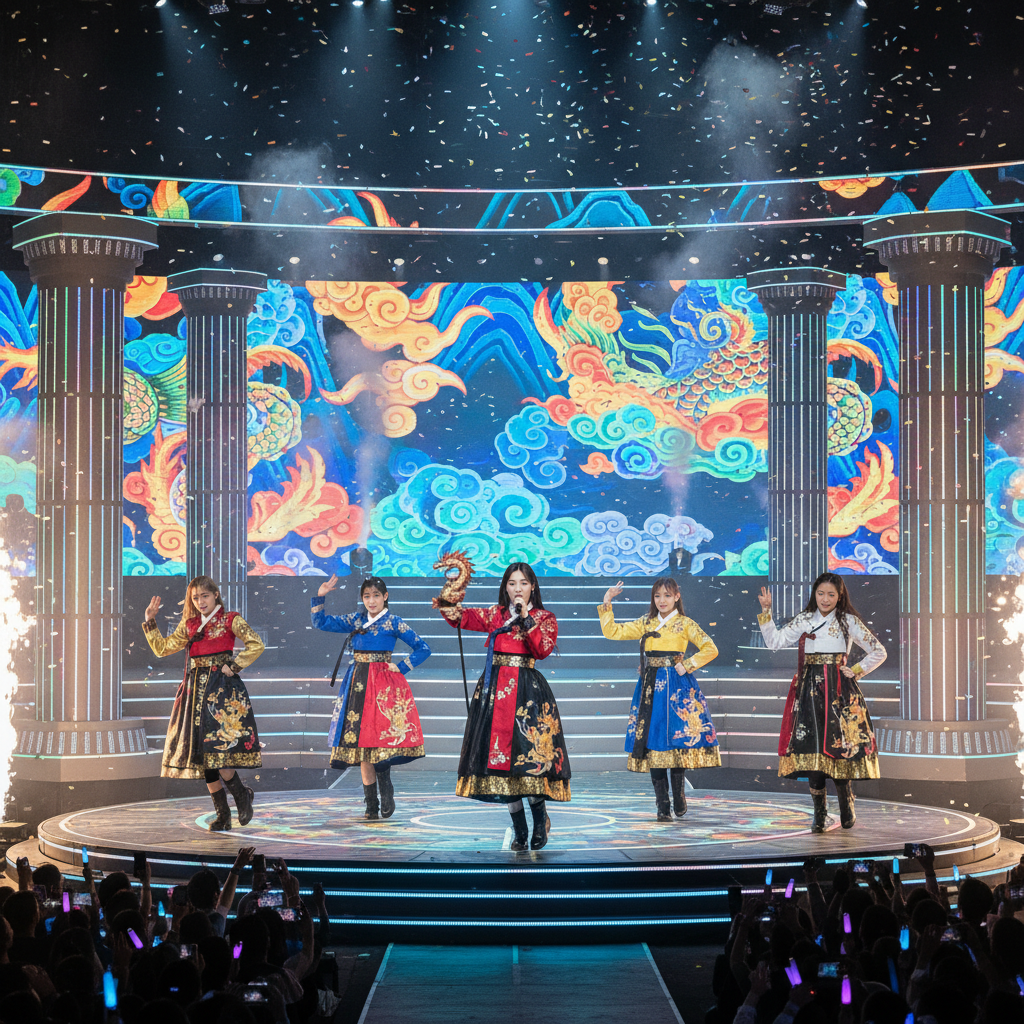
The film also shines a spotlight on other aspects of K-pop culture, including its fandom. K-pop fans will recognise various fan-signing events, the bright light sticks, Kalgunmu (dancing in perfect synchronisation), and Korean signs at concerts. It does not focus on any particular K-pop group or generation — the cast members can come from any K-pop culture era. The K-pop depiction goes beyond the clichés and shows the entire culture.
Fantasy elements in KPop Demon Hunters also draw on tradition. Huntr/x’s swords and fans are similar to traditional weapons used by Mudang (shamans), Saja Boys resemble the Korean Grim Reaper, and other scenes and characters reference folktales. Dangsan trees, Dokkaebi goblins, Korean guardian gods (Sanshin), and other symbols can be seen on sets. Folklore-inspired characters are also there, with Derpy the tiger and Sussy the magpie serving as the film’s mascots for guardianship and good luck.
Identity and Self-Acceptance
The story is universal, however. At the heart of KPop Demon Hunters is a coming-of-age story of acceptance of who you are. The characters struggle with their identities, trust themselves and others, and embrace their true nature. “Your friends may not understand right away, but they do love you and they will figure it out. I think that has resonated with people,” Golka says.
With a mixture of edgy K-pop music, high-quality animation, genuine K-culture details, and a universally resonant story, KPop Demon Hunters has found its way to the audience. It is, at the time of this writing, a Netflix hit and a music soundtrack included on several charts and lists. And as fans’ enthusiasm and the calls for a sequel show, this could be just the beginning.