
- calendar_today August 12, 2025
A State of Quiet but Steady Growth
Indiana may not make national real estate headlines, but in 2025, it’s catching the attention of investors looking for stability over speculation. With home values climbing modestly and demand for rentals increasing, the state is showing the kind of slow-burning strength that appeals to both local and out-of-state buyers.
According to the Indiana Association of Realtors, closed home sales rose by 3.4% in February, with notable activity in Indianapolis, Evansville, and Fort Wayne. Median home prices remain well below the national average, and with mortgage rates stabilizing around 6% and inflation easing to 2.8%, the state’s affordability continues to make it an investor-friendly environment.
Unlike overheated markets where prices outpace wages, Indiana’s real estate fundamentals remain well aligned—supporting both sustainable growth and solid rental returns.
Build-to-Rent Expands in Suburbs and Small Cities
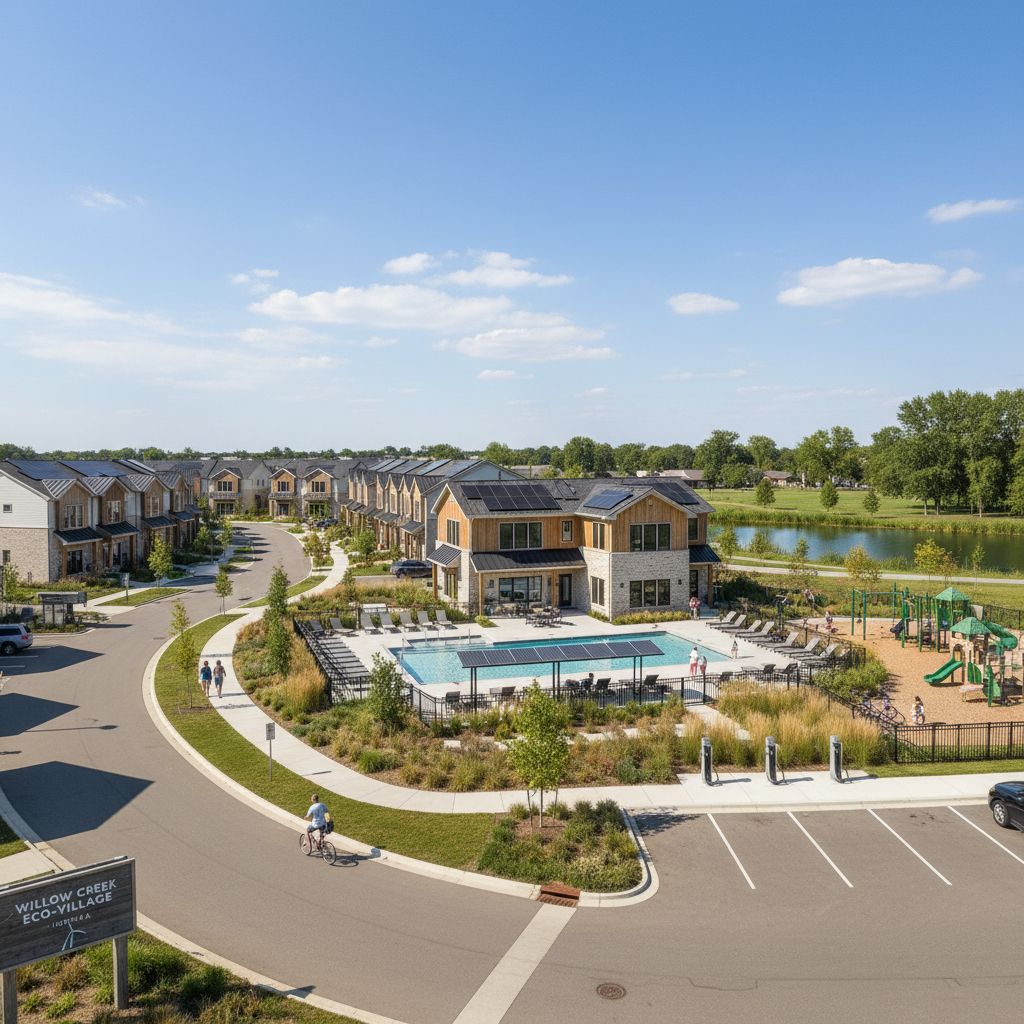
Build-to-rent (BTR) developments are gaining traction across Indiana. Traditionally dominated by owner-occupied subdivisions, suburban regions like Fishers, Plainfield, and Noblesville are now welcoming thoughtfully designed rental communities.
These projects are appealing to young families, downsizing retirees, and remote workers who prioritize flexibility and amenities over ownership. One BTR development near Westfield features energy-efficient townhomes with dog parks, community gardens, and co-working lounges—signaling a shift in how rental housing is conceived.
A regional developer explained: “We’re not just filling a gap—we’re building for a new mindset. Renters today want permanence without the paperwork of owning. Indiana’s price points let us deliver high-quality rental homes at scale.”
Indiana’s Mid-Sized Cities Offer Value and Velocity
Beyond the capital, Indiana’s mid-sized cities are offering investors strong returns and relatively low competition. Fort Wayne, for example, has become a hotspot for real estate investors due to its revitalized downtown, expanding healthcare sector, and affordable housing stock.
A recent redevelopment of historic buildings along the St. Marys River into loft apartments drew immediate lease-ups—many by young professionals priced out of Indianapolis. Similar momentum is occurring in South Bend, where the influence of Notre Dame University has pushed demand for student and faculty housing far beyond campus boundaries.
Even smaller cities like Lafayette and Terre Haute are seeing increased activity, particularly in duplexes and small multifamily units. With stable employment bases and moderate appreciation, these cities offer investors long-term cash flow potential with minimal volatility.
Mortgage Stability Encourages Long-Term Investing
The steady hand of the Federal Reserve has provided a level of predictability investors have long craved. Indiana’s relatively low home prices—often under $250,000 in most counties—mean that even at 6% interest, monthly mortgage payments remain manageable.
This has opened the door for buy-and-hold strategies, particularly for investors targeting value-add properties or new construction rentals in growing suburbs. In places like Greenwood and Jeffersonville, renovated duplexes and tri-plexes are attracting both local tenants and out-of-state investor capital.
While affordability remains a strong suit, Indiana is also benefiting from consistent population growth. Migration from neighboring states like Illinois and Ohio is boosting both housing demand and rent stability, especially in counties adjacent to the Louisville and Cincinnati metro zones.
Commercial Real Estate Driven by Logistics and Industry
Indiana’s commercial real estate sector is thriving—not in traditional office towers, but in logistics, warehousing, and light manufacturing. The I-70 and I-65 corridors, particularly near Plainfield, Lebanon, and Columbus, have become logistics powerhouses.
According to CBRE, industrial leasing activity in central Indiana rose 12% year-over-year, with developers racing to keep up with demand from e-commerce, food processing, and automotive suppliers. Amazon, FedEx, and Walmart are among the major players expanding distribution capacity in the state.
Downtown office markets are slower to rebound. In Indianapolis, some legacy office buildings are being repositioned as mixed-use developments or co-working hubs—while others face rising vacancy and underutilization. However, medical and educational campuses are performing strongly, especially near IU Health facilities and university extensions.
REITs and Funds Find Midwest Stability in Indiana
Institutional investors seeking Midwest exposure through passive investments are increasingly eyeing Indiana-based REITs and real estate funds. Multifamily REITs with holdings in Indianapolis, Muncie, and Fort Wayne are showing consistent yield performance, supported by steady rent increases and low vacancy rates.
Funds like Schwab U.S. REIT ETF (SCHH) and Nuveen Short-Term Real Estate Securities Fund (NREAX) offer indirect exposure to Indiana’s growing logistics and residential markets, with lower entry thresholds and built-in diversification.
Regional fund managers have begun crafting Indiana-focused portfolios that concentrate on suburban rentals, value-add rehab properties, and logistics-linked commercial spaces.
Looking Ahead: What Will Shape Indiana’s Market in 2025?
Several evolving factors are expected to guide Indiana’s real estate landscape through year-end:
- Electric vehicle production, especially around Kokomo and Bloomington, is fueling job creation and infrastructure upgrades.
- Affordable housing legislation, including new tax credit programs, could unlock development in rural and underinvested areas.
- Zoning modernization efforts, particularly in Indianapolis and Evansville, may support higher-density development in growing corridors.
- Climate and flood risk, especially in southern counties along the Ohio River, is increasingly being factored into insurance and property planning.
A local analyst summed it up: “Indiana isn’t chasing a boom—it’s building a foundation. Investors who prioritize fundamentals over flash are finding what they need right here.”
With its combination of affordability, industrial momentum, and market discipline, Indiana continues to offer one of the Midwest’s most reliable real estate investment environments.
For monthly briefings on Indiana’s property trends, commercial developments, and investor strategies, subscribe to the Hoosier Market Monitor.