- calendar_today September 2, 2025
Amazon is again redefining the rules of delivery, and this time, Indiana is the stage. The state is entering a new, bold era in logistics as Amazon expands its drone delivery initiative—an innovation that will redefine the way packages are delivered throughout the Hoosier State.
The Emergence of Prime Air in Indiana
Over the past decade, Amazon has heavily invested in faster, smarter delivery solutions. Now, with the latest wave of drone technology under its Prime Air program, the company is rolling out airborne deliveries that could cut hours—or even days—off traditional shipping times. Indiana, with its strategic location, infrastructure, and openness to innovation, is now one of the key areas in this nationwide drone rollout.
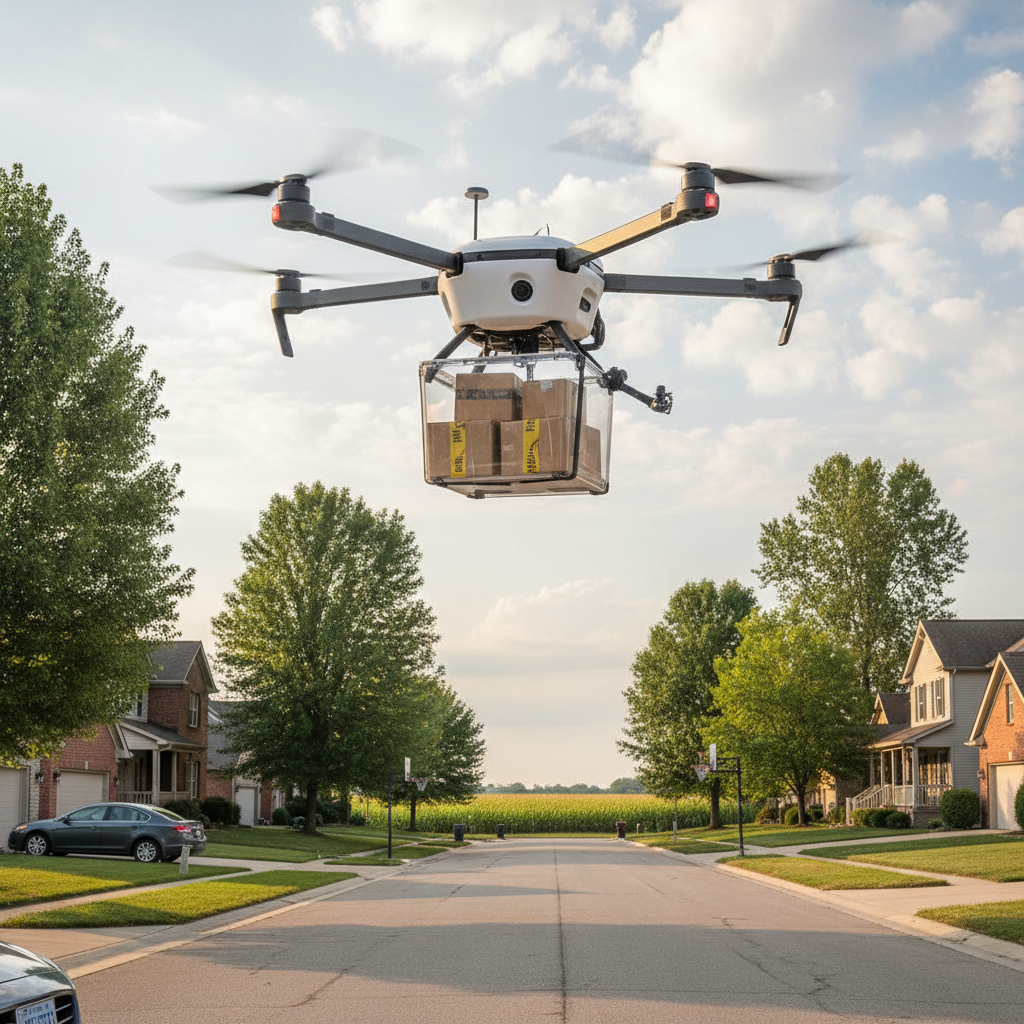
Amazon’s drones are equipped to fly straight to customers’ doorsteps, delivering packages in less than 30 minutes. They’re not the clunky, noisy machines we used to picture. The new models, such as the MK30, are small, quiet, and able to navigate all types of weather—a sweet combination for Indiana’s fickle seasons.
Why Indiana?
Amazon’s decision to add Indiana as part of its drone expansion is not by chance. The state is already a logistics powerhouse. Having large distribution centers, connections to national highways, and a labor pool familiar with technology and manufacturing, Indiana offers the perfect platform for the forefront of logistics.
Indiana’s rural communities also have the most to gain. In areas where it would take a day or two for a truck to get a package there, drones can get there in less than an hour. This type of delivery can close gaps in access to products, particularly in smaller towns that tend to get underserved by established logistics networks.
How Drone Delivery Works
This is how it works. A consumer orders an eligible product. If his/her address falls within the drone delivery area and has suitable safety standards (such as an open drop-off area), the order is placed in a box, loaded onto a drone, and shipped from a local fulfillment center. The drone delivers autonomously, avoids obstacles, and drops off the package safely into the consumer’s yard or preferred location—all without the need for human handling.
The most significant breakthrough enabling this is the Federal Aviation Administration’s recent approval for Amazon to transport drones over visual line of sight. This would mean operators do not have to visually see the drones flying. That frees up bigger areas of delivery and makes the whole system more practical.
Increasing Jobs and Tech Growth
The growth of drone delivery is not about displacing employees—it’s about opening up new opportunities. As drone activities grow in Indiana, so does the need for support functions. From drone maintenance technicians and airspace safety experts to logistics coordinators and drone operators, a whole new class of high-tech careers is unfolding.
Additionally, Amazon’s growth is piquing the attention of Indiana universities and technology institutions. As drone operations move into the mainstream, drone technology education programs and certifications are becoming increasingly popular, providing a long-term pipeline for future aerospace and logistics careers.
A Greener Way to Deliver
There is also an environmental advantage. Delivery trucks, as efficient as they are, still emit gases and cause traffic congestion. Drones, which are powered electrically, leave a smaller carbon footprint. As Indiana and the nation push for sustainability initiatives, drone delivery might be a significant contributor to cutting emissions associated with the increasingly popular e-commerce industry.
Fewer trucks on the road also translates to less wear and tear on infrastructure—another long-term benefit for Indiana, which spends millions annually to maintain roads and highways utilized for heavy delivery operations.
Community Reactions
As with any change, drone delivery brings concerns. Are they safe? Will they intrude on privacy? Can they be relied on to fly over houses and farms?
These worries are known to Amazon, and it has put significant investment into safety measures. The drones have obstacle detection systems that will spot trees, electrical wires, even pets or humans. They operate at safe distances above the ground and only release packages when landing areas are free from obstacles. In areas where drones are already in use, accidents or disturbances are hardly reported.
Education and transparency are going to play a central role as drone operations grow in Indiana. Public demonstrations, town halls, and open guidelines can alleviate concerns and establish a sense of trust among local residents.
What’s Next for Indiana?
This is just the start. As the technology continues to develop, drone delivery could expand to cover items such as medical equipment, emergency equipment, and even groceries. For a state like Indiana, with variable access to rapid delivery between big cities and small towns, the potential is enormous.
In the years to come, Indiana could well be a national leader in drone logistics, paving the way for other states to follow.
Conclusion
Indiana is moving boldly into the logistics future. By embracing Amazon’s drone delivery initiative, the state is not only streamlining delivery times—it’s opening the door to tech innovation, job creation, environmental advancement, and more cohesive communities. As drones soon take to Indiana’s skies, they bring with them more than mere packages—they bring with them the potential for a smarter, faster, more efficient future.