
- calendar_today September 1, 2025
If you’ve ever pictured a space vehicle with a Honda logo on it, you’re not alone. It’s the latest direction of the famed carmaker’s “Power of Dreams,” as its slogan says. That, however, isn’t exactly how we imagined it would look. The fact that it’s only recently come to pass shows that.
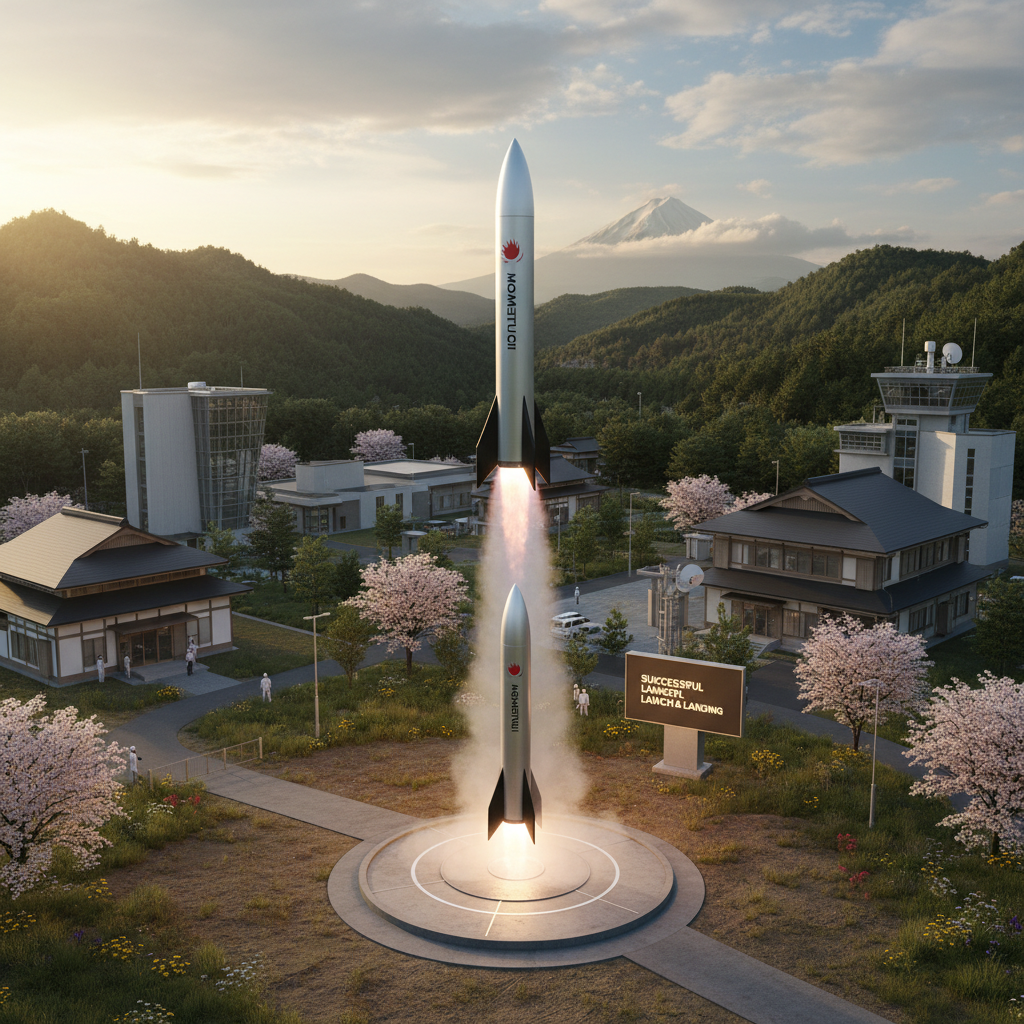
The company just achieved a test launch and landing of a reentry rocket built by its own research and development arm. For Honda, it’s the first successful trial of its kind — and the rocket only lifted off from its own base in Taiki Town, Japan. It also landed within a few feet of its target. Impressive!
The launch took place on the premises of the Honda Aircraft Research & Development Company. There, the company plans to expand its facilities to 100,000 square meters (0.1 km2) to serve as a hub for future rocket and spacecraft projects. One aspect that makes this a center for spaceflight innovation is that it’s located in Hokkaido, Japan’s northernmost island, a place with a track record of aircraft production.
The Taiki region, just 300 kilometers from the Earth’s surface, boasts a number of factories and manufacturers dedicated to aerospace production. Among them is AAM (Advanced Aero Engines Manufacturing), which is behind some of the Honda jet engines currently used in regional jets and F-15 fighter planes. This is the first successful test from its rocket launch pad in the area.
Despite its relative infancy, the launch and landing was made possible with technology and resources already in Honda’s hands. As a result, it’s only one piece of a bigger vision that’s yet to take shape. But it’s a glimpse of the coming future for Honda’s power plants and robotics.
Aircraft Experience Goes into Space
When Honda announced its interest in aerospace in late 2021, it seemed an unusual pivot for the carmaker. In 2021, for instance, Honda sold over 1 million vehicles, putting it in a league that very few companies can enter.
For its part, the automaker has maintained a silent approach since its initial announcement, doing its work behind closed doors. Honda’s first full-scale test of its spacecraft program, launched this week, is the culmination of all those years of behind-the-scenes work.
Honda’s resources weren’t built overnight, but they come from the manufacturing prowess Honda’s known for. The carmaker began life as an agricultural company in 1948. As it entered the 1950s, it pivoted into production of small three-wheel vehicles to serve in remote parts of Japan.
In the decades that followed, Honda expanded its capabilities. It now has a strong network of factories and suppliers, ready to manufacture not only cars and motorcycles but also products in various industries. Its industrial robots are a testament to this, which it first unveiled in 1969. The company also worked on its own fuel cells in 1999, producing them until recently. That experience gave the carmaker a long history of working with battery and fuel cell technology.
That knowledge comes in handy as the company embarks on its next frontier.
Car technology is a key driver in Honda’s space program. Most notably, the company has developed the software and hardware for its self-driving capabilities, one of its key developments. That technology is key in a self-driving car’s control, which makes it possible to handle a rocket launch and landing.
Honda is exploring the application of its vehicle technology to other industries, such as automobiles and automobiles. But it’s still early days. For now, the company is focusing on one goal: taking a small hop into the upper atmosphere.
Its current program aims to test a suborbital flight by 2029. That means reaching a height of at least 100 kilometers (62 miles) above sea level, breaking the Earth’s atmosphere and returning safely. These flights don’t reach orbit, but they take off and come back to Earth.
This height, 62 miles (100 km) is less than the distance between Japan and the US, but it’s the highest point Honda has ever reached. From there, the company plans to develop the vehicles, engines, and guidance systems for future space missions. Those elements, though, aren’t yet built.
Once the company launches satellites, it would have to construct the rockets, engines, and spacecraft needed to reach the vehicle. These can be smaller than what we saw this week, but they require different guidance and control systems. However, the launch and landing technologies used here will serve as a stepping stone for that work.
At the moment, there’s no commitment to making the test a commercial service. But with these achievements under its belt, it’s an option that could be around the corner.
What’s interesting is that Honda is launching the rocket in its own town. In Taiki Town, a little north of Japan’s largest island, several private companies and agencies are looking to turn the place into a hub for space research and development.
The region has established a space park called the J-TOPSPOT, partnering with a local entity and the Japan Aerospace Exploration Agency (JAXA). Among the companies that have since joined the group are Oshigai and Hisashi Mori. These private companies are partners with the city, helping to set up infrastructure, support services, and training programs for aspiring engineers.
With Honda now in the mix, the region is well on its way to being one of the leading space hubs in Japan.
For its part, the carmaker is a newcomer in a market of huge players like SpaceX and Blue Origin. They have enormous resources, along with years of experience in space and orbital technology. What Honda brings to the table is different: manufacturing and industry experience. Honda has an understanding of how to make products and, specifically, how to get them to their customers. The carmaker has a unique ability to deliver products efficiently and quickly. This experience is a major advantage for the space program.
It remains to be seen whether Honda will grow to be a major space company. For now, it seems that this week’s test was a mere opening act for what’s to come.