
- calendar_today August 23, 2025
.
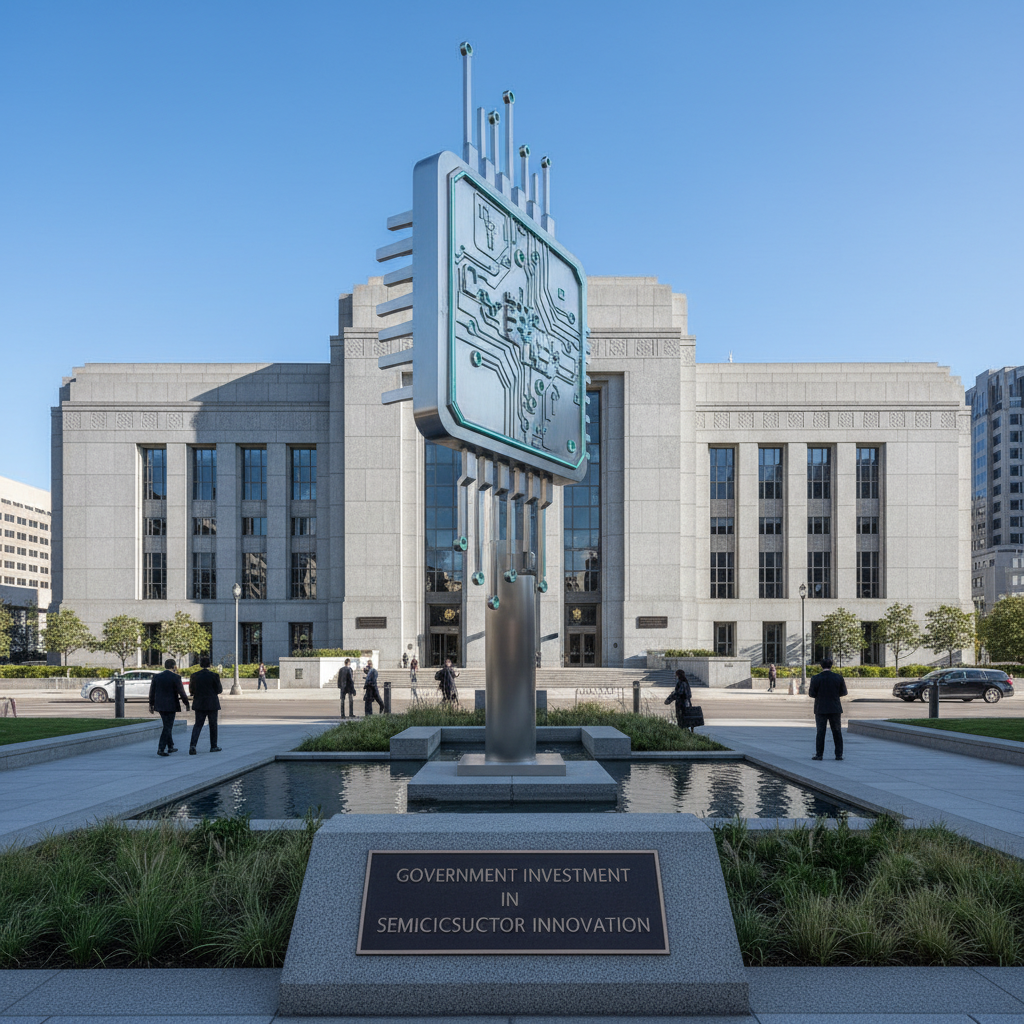
President Donald Trump just made the federal government Intel’s largest shareholder, after he authorized a 10% stake in the troubled American chipmaker. It’s a move that breaks from decades of Republican orthodoxy on the economy, and it’s spurred consternation among conservatives who have otherwise stood by the president.
Trump is brushing aside such concerns. “This is not socialism; this is a great investment for our country. It’s going to make us richer and richer,” Trump said, as he hinted at additional deals. “I hope I’m going to have many more cases like it,” he said on Friday. “We’re using what was called industrial policy, we’re picking winners and losers, and it’s working.”
Critics, however, are left to wonder where this will stop. After decades of defining socialism as government ownership of the means of production in the name of society’s common benefit, Trump’s decision doesn’t look all that different from what goes on in China or Russia.
It’s not lost on the president’s critics that conservatives were outraged when former President Barack Obama took control of Chrysler and General Motors during the 2008–2009 financial crisis. But if Obama had taken a 10% stake in Intel? “Conservative news media would have been lambasting Obama as a communist,” said one Trump ally.
Trump is not buying that. He has tried to make a distinction between an investment and a bailout. The president noted that he turned nearly $9 billion in grants (funds that the company would have received anyway under President Joe Biden’s bipartisan Chips Act) into equity for the U.S. government, which in effect created $10 billion to $11 billion in new value for taxpayers. “Why are ‘stupid’ people unhappy with that?” he asked.
The growing conservative outcry is not likely to dissuade Trump. Larry Kudlow, the former Trump top economic adviser, said on Fox Business that he was “very, very uncomfortable with that idea.” Steve Moore, another informal adviser, was more direct. “I hate corporate welfare. That’s privatization in reverse. We want the government to divest of assets, not buy assets. So terrible, one of the bad ideas that’s come out of this White House,” Moore told The Washington Post.
National Review also published an editorial that declared: “government shouldn’t get into the chip business.” Senator Thom Tillis was alarmed, warning of a “semi-state-owned enterprise a la CCCP” (the former Soviet Union). Senator Rand Paul made the same point in a tweet: “Wouldn’t the government owning part of Intel be a step toward socialism? Terrible idea.”
Intel, for its part, is warning of problems. The company said in a required SEC filing that the arrangement “may adversely affect our ability to receive future government grants, harm our worldwide sales, and subject us to additional regulation.” Intel, which announced plans in March to lay off 15% of its workforce, has been on rocky ground before Trump. Its market valuation is around $110 billion, down 50% since the beginning of 2024, although the stock price did move 4% higher immediately following Trump’s announcement.
The Wall Street Journal reported that Trump had demanded the resignation of Intel CEO Lip-Bu Tan after learning of his past work in China. Trump called Tan to the White House and said he was keeping his job after the two met in person, apparently to Trump’s satisfaction. “I liked him a lot, I thought he was very good,” Trump said afterward.
White House officials have said that the U.S. government will be a non-voting shareholder and will have no role in Intel’s business decisions. Intel CEO Tan repeated that point when asked about it on a conference call with analysts. But it’s easy to understand why some are skeptical. When the president of the United States becomes a company’s largest shareholder, influence is probably inevitable, even if officials promise otherwise.
The endgame here is straightforward. If Intel rights the ship, Trump will get to take credit for shoring up one of America’s signature high-tech companies. If it continues to sink, taxpayers will foot the bill. Trump is only further muddying the waters by saying that he’s open to more such arrangements.
It’s socialism, Trumpists say. It’s capitalism, the critics reply. It’s Trumpism, most independent observers will likely conclude. At the very least, it’s a fundamental shift in the relationship between the federal government and private enterprise, and an illustration of how far Trump has transformed the Republican Party’s approach to economic policy