
- calendar_today August 19, 2025
The world wave of artificial intelligence is cresting—and Indiana is ensuring it’s riding the tide. While OpenAI is accelerating its global push, the Hoosier State is keeping a close eye on how this wave of AI adoption will impact its tech sector, manufacturing sector, and schools.
Its extremely strong production sector, reasonably good-quality training centers, and its rapidly expanding technology center, Indiana is extremely well positioned to take the front-runner role of leading the pack in the AI revolution.
OpenAI’s Global Vision and Its Implications for Indiana
OpenAI’s mission to advance and deploy general-purpose artificial intelligence has gained significant traction worldwide. With new international offices, collaborations, and product rollouts on the horizon, the organization’s global growth is not just reshaping how businesses operate but also redefining the local tech landscapes in regions like Indiana.
For Indiana, OpenAI’s international expansion represents a dual-edged sword: on one side, it offers access to cutting-edge AI tools, research partnerships, and business opportunities; on the other, it increases competition for high-caliber tech talent and funding.
Some of these centers like Purdue University, Indiana University, and Notre Dame have already been funding research and development for AI. Such centers are already in place to provide Indiana as a jump board for accessing and engaging OpenAI technology into school and business systems.
OpenAI COO Leads the Global Strategy—What It Means for Indiana
OpenAI’s expansion strategy is being driven by its Chief Operating Officer, who is focused on regional collaborations, AI accessibility, and ethical deployment. This vision aligns with Indiana’s industrial profile and strategic interests in AI-driven sectors.
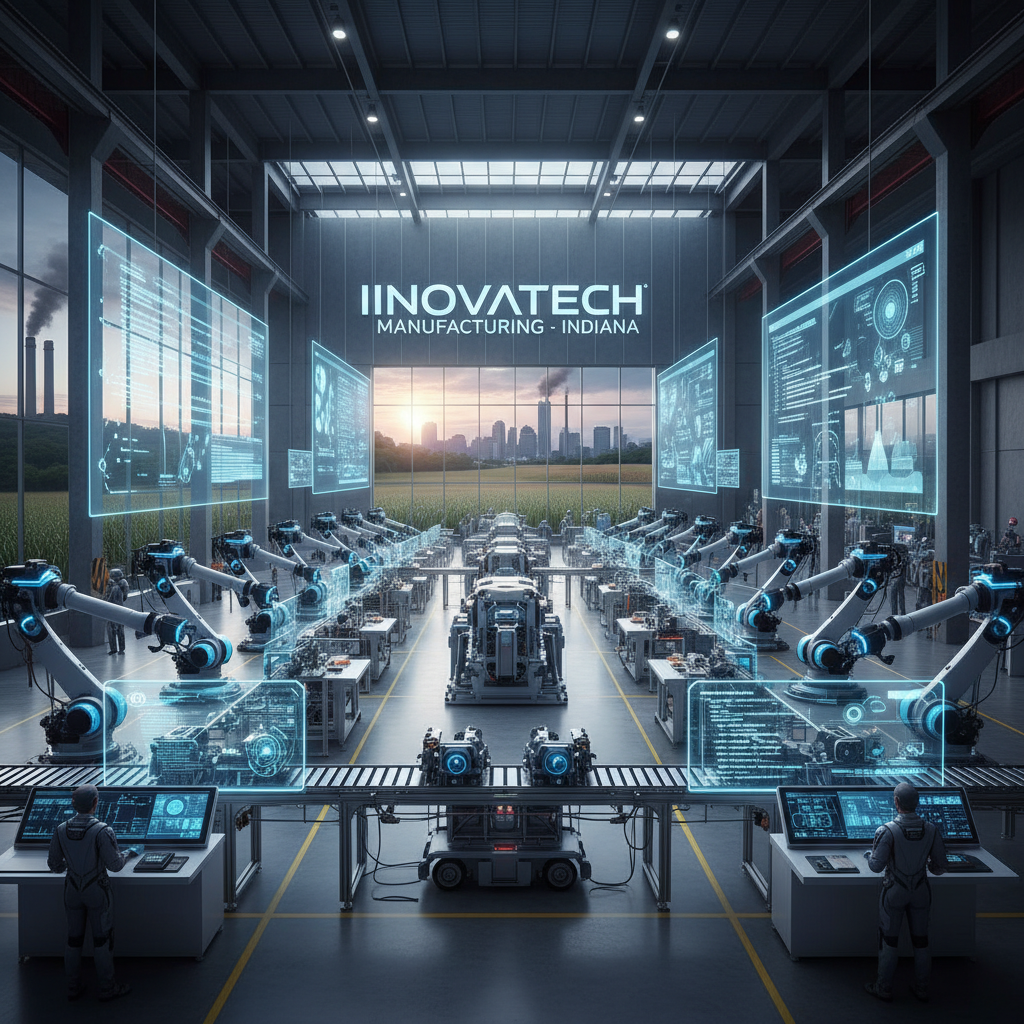
As a state that has top-of-the-line manufacturing, logistics, and agriculture expertise, Indiana will gain immensely from the focus OpenAI gives to real-world, applied AI adoption. Applications such as predictive maintenance, autonomous systems, and efficient supply chains have the potential to revolutionize Indiana’s heritage industries.
OpenAI’s increased presence could also encourage more public-private partnerships, boost startup activity in AI, and lead to the establishment of regional AI hubs or data centers that support Indiana’s long-term innovation goals.
AI’s Growing Footprint in Indiana’s Business and Technology Landscape
Indiana’s business community already is serious about AI. Right from the industrial automation firms based in Indianapolis to the agritech startups in West Lafayette, the move towards machine learning, data interpretation, and intelligent automation already happened across sectors.
OpenAI’s advanced tools in natural language processing (NLP), vision systems, and predictive modeling can enhance Indiana’s local tech offerings, allowing companies to build smarter, more responsive systems. In the healthcare sector, providers are exploring AI for diagnostics, patient triage, and administrative automation. In transport and logistics, AI is helping businesses improve delivery routes, inventory forecasts, and operational efficiency.
Since more and more businesses are trying out these technologies, demand is mounting for professionals specializing in AI. Consequently, it is increasingly being pressure-pointed to revise the curriculum at vocational schools as well as colleges, i.e., data science, AI engineering, and cybersecurity.
Challenges: Talent, Funding, and Competitive Pressure
While the potential is huge, it is not infinite. OpenAI expansion would make the competition for technology professionals even more intense, not just domestically but even locally. Indiana companies could potentially compete with global companies to attract and retain AI personnel, engineers, and data scientists.
Additionally, small business firms and start-ups may face difficulty in keeping up with the processing capabilities of computers and amount of financial investments necessary to establish and implement AI solutions at the desired scale. In terms of competitiveness, majority of such organizations want to be financed by innovation grants provided by the government, partnership with academic institutions, as well as accelerators.
Ethical AI and Regulatory Issues in Indiana
While AI adoption gains momentum, issues regarding data privacy, algorithmic bias, and automated decision-making increasingly surface. Policymakers and research institutions in Indiana are increasingly taking up the discussion about ethical AI frameworks.
Application areas such as healthcare, finance, and the justice system—where AI use has direct impact on human welfare—are being scrutinized especially. Fortunately, the professed emphasis of OpenAI on transparency and responsible AI utilization coincides with Indiana’s interest in consumer protection and regulatory equilibrium.
State legislatures are considering bills that can facilitate AI development without violating human rights. Such rationales will become stronger as OpenAI develops and artificial intelligence penetrates deeper into life.
Indiana’s Leadership in the AI-Driven Future
The next decade will chart the path by which Indiana joins the national discussion on AI. By investing in research, education, and infrastructure, Indiana can be the regional center of AI development and adoption.
Current efforts already in progress are:
- University-industry partnerships for AI R&D.
- developing AI and machine learning degree programs.
- Fostering tech start-ups and AI innovation hubs.
- Public roundtable forums and workshops on ethical AI and economic effects.
Even while OpenAI is at the leading edge of global AI advances, Indiana’s entrepreneurial spirit, economic diversification, and world-class universities provide a strong foundation upon which to create a thriving, forward-looking future.
Conclusion: Breaking Trail with Purpose and Precision
Indiana is more than just a spectator in the age of AI—it’s preparing to be a contributor and a competitor. OpenAI’s worldwide expansion has the potential to ignite significant economic growth and innovation within the state, provided the response is strategic, inclusive, and future-focused.
With the marriage of its industrial might, educational intensity, and regulatory vision, Indiana is able to harness the global AI revolution and turn it into a born-here-first movement—a movement that energizes businesses, empowers communities, and builds legacies.